
GET RHYTHM
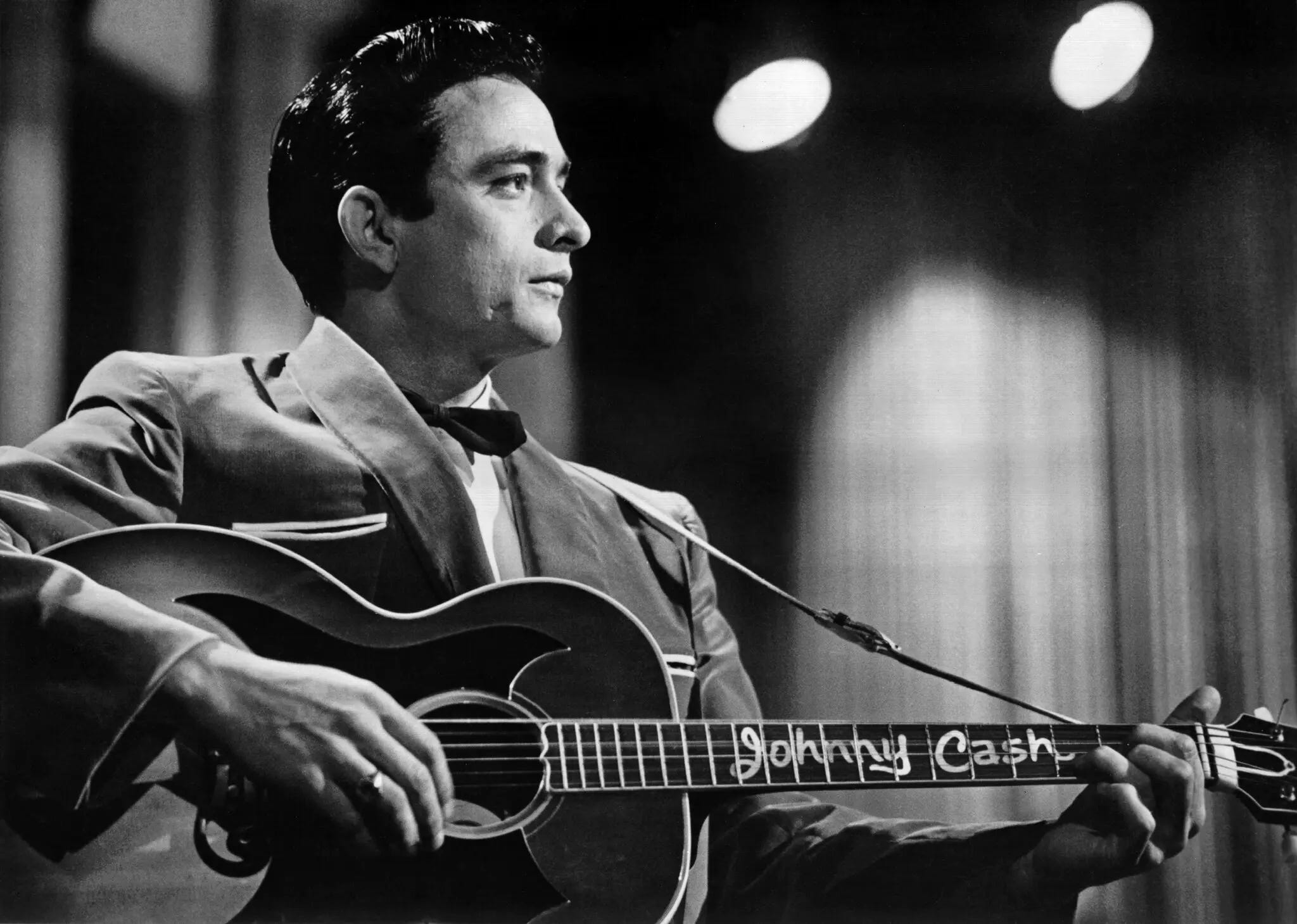
A little on the music of sentences in fiction (sorry, this isn't about Johnny Cash)

Thanks for tuning into Pedal Steel. After much unnecessary throat-clearing about my evolution as a music-lover, this is a post about sentence-rhythm in literary prose, with examples from Hemingway, Cormac McCarthy, Toni Morrison, and Barry Hannah.
I think a lot about rhythm. I was playing music well before I’d had any interest in reading and writing, down-picking drop-D riffs on a Mexican Fender Fat Strat in my room at sixteen, seventeen, every day, pages torn out of Guitar World magazine, glossies of Pink Floyd’s David Gilmour and Slipknot’s Corey Taylor taped to my wall. A large red flag hung above my headboard, one with the great white Deftones pony.
In college I fell in love with the Rolling Stones, hearing Beggar’s Banquet through Exile On Main Street start to finish for the first time. This opened the door to classic country and Delta Blues. A Wilco phase led the way to Big Star. Big Star led to the Flamin’ Groovies and The dB’s and The Raspberries. My teenage obsession with Three Six Mafia eventually led to MF Doom and GZA’s Liquid Swords. I dug deeper.
An obsession with Dylan led to his early 2000s Americana masterpieces Love and Theft and Modern Times and from here I discovered Charley Patton and Skip James and Slim Harpo and Geeshee Wiley and Blind Willie Johnson and … and … that’s enough. Where are we going here? Hemingway, Faulkner, Flannery, McCarthy, William Gay, Denis Johnson—these obsessions emerged in tandem with a heightened music literacy as I came of age. I decided I wanted to be a writer, and to keep music off to the side, a hobby.
A lot of people in my MFA cohort were great players. I don’t know how I got that lucky. There was my buddy Billy, a touring musician before he’d entered the fiction program. We formed a Tom Petty cover band called Petty Bullshit and played readings and shows at the VFW in Missoula, Montana. Nick Bosworth, a poet, could’ve been a session player in Nashville, that’s how good he was on guitar. Rachel sang like a ragged angel in a smoke-filled speakeasy. Brian could handle the keys like Benmont Tench. There were at least a dozen talented musicians across both cohorts in a two-year program, and some of our professors, even, were incredible players. Kevin Canty could howl the blues, and his brother is or was the drummer of Fugazi. David Gates could handle a pedal steel, had two vintage Teles and a Princeton Reverb and an eighty-year-old Gibson parlor guitar—mother of pearl fretboard—at his house. I visited him one time up at the Bennington Writing Seminars in Vermont and watched him on stage with New Yorker critic James Wood—who played drums if I recall correctly—and Southern Gothic novelist Lee Clay Johnson on stand-up bass. A lot of good writers I’ve met over the years, music seemed to be their first love. During my early writing life, music was everywhere.
And it’s everywhere in the best English language prose I’ve encountered. Good storytelling ignites the senses with clear, surprising imagery and an engagement with smell, touch, taste, sound—but also with the sounds of the words themselves. A writer is a musician even if they’ve never played an instrument.
This may sound trite if you’ve been in the game of writing prose or poetry for some time, but there might be some younger writers online here just starting out. So it’s useful to remind people how important it is to pay attention to sentence rhythm. After all, I don’t think I would’ve cared much for literature, or had started caring when I did, if there wasn’t a musicality to language in novels. This is something I never noticed in literature until I discovered the books that made me want to be a writer. Like a lot of youngsters, Hemingway really helped start it for me.
We’re gonna look at some seemingly unremarkable sentences in the opening of one of Hemingway’s early stories, “Indian Camp”:
Nick and his father got in the stern of the boat and the Indians shoved it off and one of them got in to row. Uncle George sat in the stern of the camp rowboat. The young Indian shoved the camp boat off and got in to row Uncle George.
The two boats started off in the dark. Nick heard the oarlocks of the other boat quite a way ahead of them in the mist. The Indians rowed with quick choppy strokes.
The imagery is very stark and very clear. This is classic, standard issue Hemingway. Read the sentences out loud.
There’s some kind of—what do you call it?—pentameter here, a rhythm to “Nick and his father got in the stern of the boat..”
“Ba-da-da-dada-dadada-dadada-da-dah!” Or some shit like that. Much has been said about Hemingway’s stripped-down, simple diction and its influence on American literature is still felt a hundred years on. It did him a lot of favors with rhythm.
“The Indians rowed with quick choppy strokes.” Well, that sounds pretty, what? Quick and choppy!
Did he mean to do that? I’d like to think so.
Another writer who stunned me as I came of age was Cormac McCarthy, and the first book I read of his was All The Pretty Horses. In the opening pages, John Grady Cole regards his grandfather dead in an open casket and steps outside into the Western evening to behold a train moving into the night:
It came boring out of the east like a ribald satellite of the coming sun howling and bellowing in the distance and the long light of the headlamp running through the tangled mesquite brakes and creating out of the night the endless fenceline down the dead straight right of way and sucking it back again wire and post mile on mile into the darkness after where the boilersmoke disbanded slowly along the faint new horizon and the sound came lagging and he stood still holding his hat in his hands in the passing ground-shudder watching it till it was gone.
Yikes. There might be too much for me to unpack here. Read it out loud.
It’s a hell of a long sentence, a sort of bridge between Hemingway and Faulkner, two of McCarthy’s most obvious literary forebears: the long expressive meanderings stacked with almost impressionistic imagery and yet McCarthy largely chooses hard, plainspoken language and verbs like “coming” and “howling” and “running” and “bellowing” and “sucking” and “lagging,” frequently using present participles to create a potent momentum to the sentence, allowing it to barrel forth just like that train. It chugs along like Sun Records Rock’n’Roll in the gothic drapery of a Western nightscape.
His use of Polysyndeton—the frequent use of conjunctions like “and” where punctuation would typically do—keeps hold of the momentum. Hemingway too was a heavy user of polysyndeton.
Near the end of Beloved—and if you haven’t read it I won’t give too much away—Toni Morrison describes a “loneliness that can be rocked,” rocked like a baby:
There is a loneliness that can be rocked. Arms crossed, knees drawn up; holding, holding on, this motion, unlike a ship’s, smooths and contains the rocker. It’s an inside kind—wrapped tight like skin.
Morrison employs the opposite of polysyndeton, using semi-colons, commas, and em dashes to create a “rocking” rhythm on the page.
These are famous examples, but it’s worth noting that some of the most celebrated authors in American letters paid very deliberate attention to rhythm. Rhythm might be the most useful tool in a writer’s toolbox. It supersedes annoying craft rules like avoiding adverbs and passive voice because often those things themselves serve the rhythm of the sentence.
One reason why I refuse to nix the em dash, which has come under fire via its frequency in A.I.-generated prose, is because it often serves rhythm. And writers can’t dispense with anything, anything at all, that serves the music of their sentences. It’s just not worth it.
Barry Hannah managed to write like a berserko Southern jazz musician (despite being edited by Gordon Lish). In his story “Love Too Long” from Airships, Hannah writes:
She and the architect were having some fancy drinks together at a beach lounge when his ex-wife from New Hampshire showed up naked with a single-shotgun gun that was used in the Franco-Prussian War—it was a quaint piece hanging on the wall in their house when he was at Dartmouth—and screaming.
This is bonkers. It is so wordy that the redundancy of “single-shotgun gun” is somehow allowed. The em dashes pause the sentence, drop the reader out of the scene and into the couple’s living room, into someplace else, someplace calm and quaint and domestic, and then the scene emerges again, suddenly screaming.
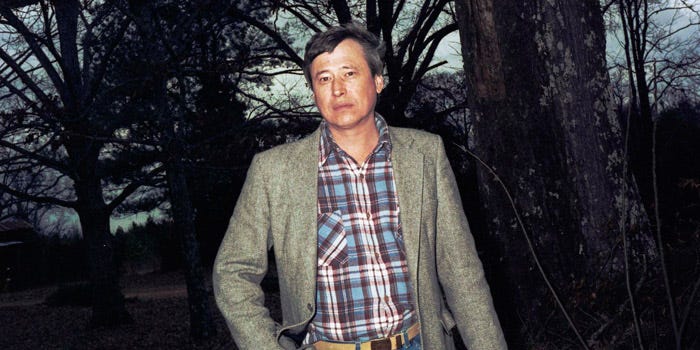
One of Hannah’s gifts was that he often wrote the way somebody’s crazy drunk uncle would actually talk, and the sentence was composed with that intent. The sentence cruises along, disorients, and lands with a howl. It flutters about like a sax solo, whereas Morrison’s sentences rock like a cradle, McCarthy’s sentence rollicks along the tracks, and Hemingway’s sentences chop like oars in a skiff.
I still struggle to make my sentences sing, but I think about it a lot more now than I ever did. You don’t ding a writer on adverbs and shit all the time. Just listen. When I’m writing the opening pages to some new story or reworking a novel, the first thing I’m looking at are my opening pages, making sure they’ve got rhythm. Is there music here? Editing for rhythm, not even grammar, really. Not for passive voice if the narrator is plainspoken and it serves the composition. Then you go on and on, sentence-by-sentence, hearing the whole damn thing through, making sure the band’s in the pocket till the needle’s done circling the last groove.
with rhythm one can be fearless. anything can be done. good piece.
That takes me back! Thanks for the memories.